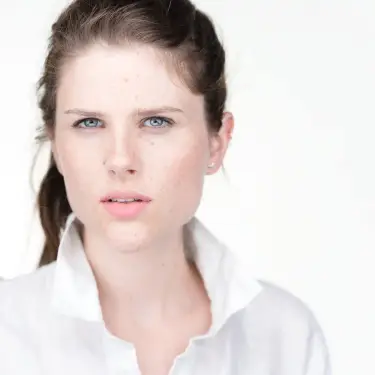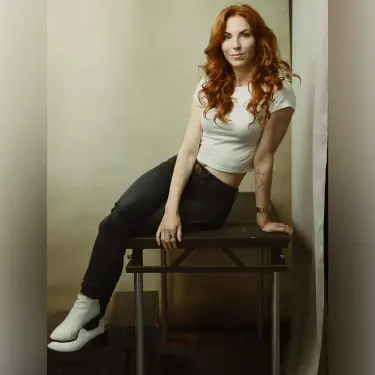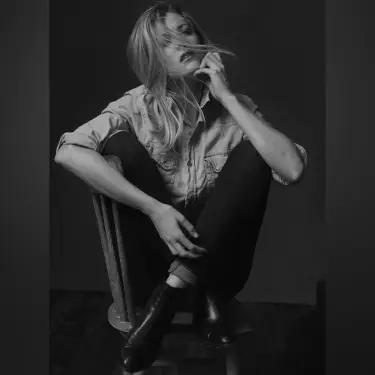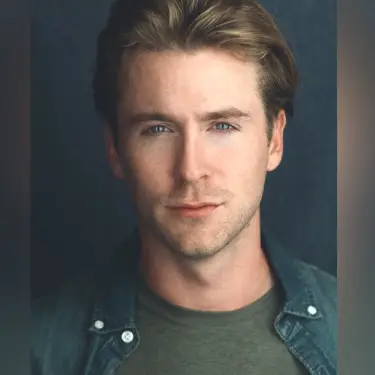
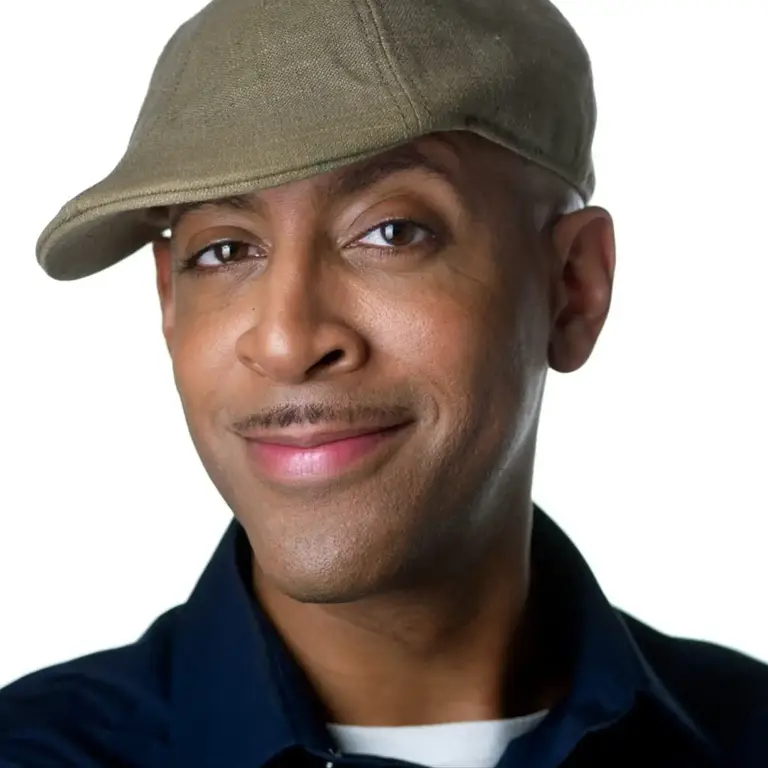
Photo: Michael Schacht / 312 Elements
Do Comedians Need Headshots?
Why a comedian's headshot works harder than an actor's, and how to photograph one
This image is available for editorial use with photo credit and a link back to this page. For commercial licensing, please contact us.
Photo: <a href="https://312elements.com">312 Elements Headshot Photography</a>Why comedians need headshots
Yes. A comedian's headshot works harder than most: it's the image on the club's wall, the show's key art, the social posts that fill seats, and the website venues check before booking. Most comedians have a headshot that's either recent or good, rarely both. Chicago headshot photographer Michael Schacht explains why, and how he photographs comedians.
Yes, and here's why
Do comedians need headshots? Absolutely. Do most comedians have a headshot that's both recent and good? Honestly, you're lucky to get one or the other, rarely both, and it's a problem. Chicago has a handful of comedy clubs, and the big touring acts play larger theaters and, in some cases, stadiums. I've always been shocked by the key art for these shows. More often than not, the image promoting the stand-up is their headshot, and more often than not, that headshot is outdated.
One headshot, four jobs
Think about it. As I walk past The Den on Milwaukee Avenue, there's a wall of headshots of the comedians passing through town. That headshot influences whether I even consider walking in or going to the website to buy a ticket. The same headshot is used across social media to fill the seats. It's on the comedian's personal website, and it's in the outreach they use to get booked by venues. I remember Vince Vaughn coming through town for a show at the Chicago Theatre. It was probably 2012, and the picture he was using was probably the same headshot that got him booked on Swingers in 1996. Eventually you get so well known that the headshot matters a little less, as in that example. For the other 99 percent of comedians: yes, your headshot matters if you want to eat.
Stand-up, improv, and sketch
Chicago's comedy scene isn't one scene, and the headshot has a slightly different job in each corner of it. Stand-ups sell tickets. Improvisers and sketch performers audition for shows and teams, and many of them book on-camera work too. Hannah McDonald graduated from The Second City Conservatory and performs on the Armando Diaz Experience at iO Theater. Ashton Swinford trained at the Stella Adler Studio before completing Second City's improv conservatory, and her television credits include New Girl and Chicago P.D. Danielle Maddox Hughlett studied improv at UCB, and her short Five Stars won Best Comedy on the festival circuit. Chris Maher went from runway work to improv and acting classes at The Second City to feature film sets. Every one of them needs a headshot that does double duty: castable for acting work and marketable for the comedy.
What photographing comedians taught me
Early in my career I set out to build a portfolio of comedians laughing. On the surface it sounded fun and straightforward. I was very naive. I hadn't spent much time with comedians, and I didn't understand their plight, though in hindsight it makes sense. Comedians are a lot like musicians. Take Taylor Swift: could she have written "Dear John" if John Mayer hadn't broken her heart? What would "All Too Well" be without Jake Gyllenhaal and that scarf? Those songs never would have happened. Comedy is no different. Most of the comedians I photographed for that project had a lot of life experience informing their comedy, and that life experience made it very difficult for me, a non-comedian, to make them laugh.
Let them make you laugh
It was a pivotal moment. My mentor, Peter Hurley, talks about being a chameleon with your clients: you adapt and meet them where they are before you take them where you need them to be. Working with comedians made that hit home. Comedians are all about the reaction. What I was doing wrong was trying to make them laugh, when what they really wanted was to make me laugh. They're storytellers, and the good ones are better storytellers than I am, so I had to adapt. I had to slow down. I had to let them talk, let them make themselves laugh, and let them react to my reaction to what they said. That's how you earn a comedian's trust.
Direct direction
Once you've earned that trust, comedians typically respond better to direct direction than to the indirect direction I usually use. Direct direction means I explain exactly what I want and then coach them into it. Indirect direction relies on catching people off guard and capturing the reaction, and it's really hard to get the jump on a comedian. They see it all coming from a mile away. It's why comedian headshots are their own discipline, even when they're made in the same studio as an actor's.
Warm, quick, and castable
Comedian headshots have a different job than dramatic ones. They have to read warm, quick, and castable at thumbnail size. On a club wall, a passerby decides in the time it takes to walk by. On a phone, the same image is a thumbnail in a feed. The expression has to land at both sizes, and it has to be real. An audience can spot a forced smile almost as fast as a comedian can.
Before your session
Come ready to talk. A comedian session should feel more like a conversation than a photo shoot at the start, because that's how the trust gets built. Think about where the images will actually live: the club's wall, the show poster, a square social post, a wide banner on a ticketing page, your own website. Each of those wants a different shape, and it's much easier to plan for them in the studio than to force a tight headshot into a wide poster later. Bring the wardrobe you perform in, plus a couple of options that point at the characters you get cast as, and text me photos ahead of time. And if your current headshot is more than a couple of years old, or you've changed your hair or your facial hair since it was taken, that's your answer: it's time.
What to ask for
Everything is shot in color now, and the black-and-white versions are processed from it; we always start in color. With comedians, my preference is a personal branding style session: we get the traditional headshot, and we also get wider crops with negative space for ad copy, the room a poster, a marquee, or a social post needs. Those wider frames have to be planned during the session. A tight headshot can't be cropped wider after the fact.
Frequently asked questions
Should comedians smile in their headshots?
Usually, but it has to be real. A comedian can spot a forced reaction from a mile away, and so can an audience. The reactions I keep come after the trust is earned, when they're responding to something that actually happened in the room.
How often should comedians update their headshots?
Every 18 to 24 months, sooner if your look changes. For comedians it matters more than for most performers, because the headshot is the key art. If the person on the poster isn't the person on stage, the audience notices.
What crops does a comedian need?
At least two: a traditional headshot for booking and casting, and wider crops with negative space so venues and promoters can drop in the show title, dates, and a ticket link. Plan both before the session; the wide frames can't be made from a tight crop later.
Do improvisers need headshots too?
Yes. Improvisers audition for shows and teams, and many also go out for on-camera work, so the headshot has to work both as an actor's headshot and as a performer's promo shot.
What should a comedian wear for a headshot?
Something that connects to how you're cast and how you show up on stage. Skip logos, loud prints, and anything shiny, which pull the eye away from your face. Text me photos of your options before the shoot and we'll sort it out together.
How long does a comedian headshot session take?
Plan on two to two and a half hours. With comedians, some of that time is just conversation, and it isn't wasted; it's how we get to the real reactions.
Where do comedians use their headshots?
Everywhere the show is sold and booked: the club's wall and website, the show's key art, ticketing pages, social posts from the venue and the comedian, press listings, and the comedian's own site and booking outreach. It's the same image doing all of those jobs, which is why an outdated one costs so much.
Can a comedian use the same headshot for acting and promotion?
Yes, if it's planned that way. From one session you want a tight, castable headshot for agents and casting, and wider frames with room for text for promotion. They come from the same day, so the person on the poster and the person in the submission always match.
How is a comedian headshot different from an acting headshot?
An acting headshot is built for casting; a comedian's headshot also has to sell tickets. The fundamentals are the same, and I walk through them in how to get a headshot for acting.