CHICAGO ACTOR HEADSHOTS
Casting-ready Chicago actor headshots for film, TV, and theatre — theatrical and commercial looks, photographed in studio with a point of view.
Chicago actor headshots are casting-ready portraits for film, television, and theatre submissions — Actors Access, Casting Networks, agent packets, and printed 8x10s. The session fee is $500 and includes a directed shoot across theatrical and commercial types plus a private online gallery to review your images together; individual images are $250 each, fully retouched and licensed for unlimited promotional use. I'm Michael Schacht, and I've photographed 10,000+ people over 17 years (since 2009), including working actors across Chicago's film, storefront theatre, musical theater, opera, and comedy scenes.
See pricing and book a session at actor headshot pricing and booking.
What makes actor headshots work for casting
Acting headshots for Chicago stage, screen, and comedy
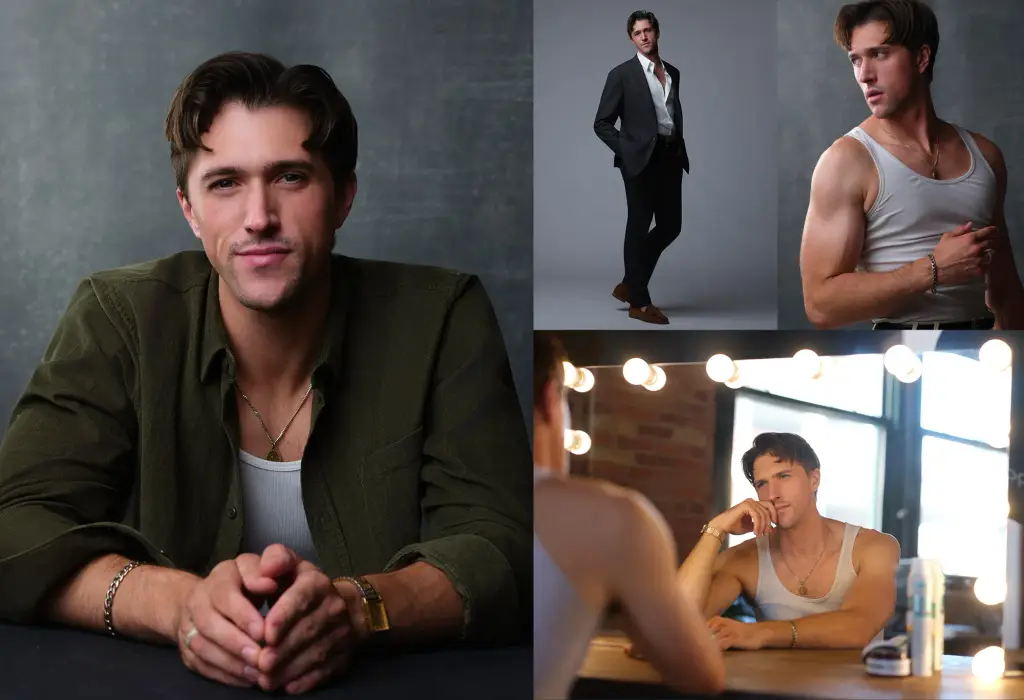
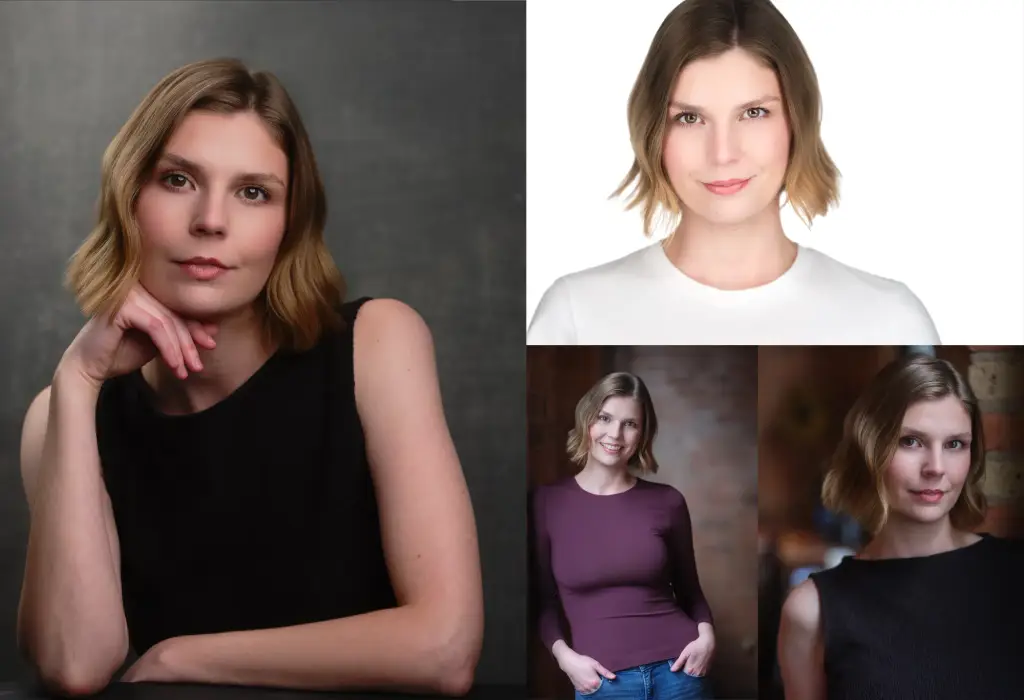
Acting headshots in Chicago go to a wide range of rooms: film and TV casting, storefront and Equity theatre, musical theater, opera companies, and the comedy stages. The job is the same everywhere, but each room reads a slightly different picture. Here's how I plan for each.
Film and TV headshots
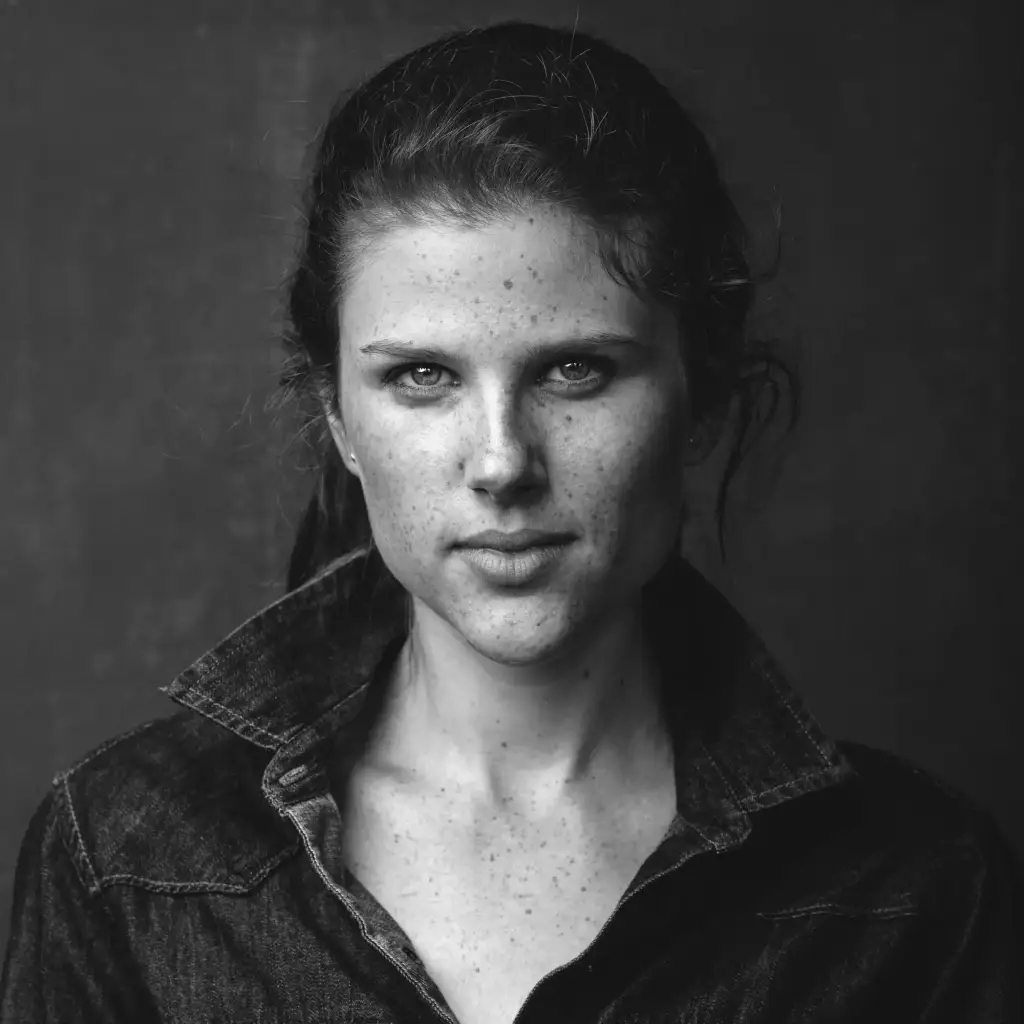
Film and TV casting works from thumbnails on Actors Access and Casting Networks, so the frame has to read at postage-stamp size before anyone clicks. For on-camera work I keep the light natural and the expression specific, and I crop tight enough that your eyes carry the image. It's the same approach behind the Chicago P.D. and Top Gun: Maverick headshots mentioned above.
Theatrical headshots for Chicago stages
Theatre is where the printed 8x10 still earns its keep: a headshot and resume handed across the table to a director, not just a thumbnail on a screen. Theatrical headshots in Chicago want presence rather than performance — engaged eyes, a relaxed mouth, and enough weight in the expression to read from across that table. I light them with a little more shape than a commercial frame, and every image you choose comes with a print-resolution 8x10 crop for exactly this use. Range matters too: the same actor can go out for a new play in a storefront space one month and a regional production the next, so I plan your looks against the seasons you're actually submitting for.
Musical theater headshots
Musical theater headshots in Chicago lean warmer than straight-play theatrical shots. Musicals cast energy and openness as much as type, so I shoot at least one look with a genuine, open smile alongside a more contained frame, plus a shot that shows your body type clearly for dance calls. The casting types further down this page matter here too — ingénue, juvenile, character, comic lead — because a musical is cast by type across a whole company. Early in Hamilton's first Chicago run, I was commissioned to photograph members of that company for promotional images, including Miguel Cervantes and Chris Lee.
Opera headshots
Opera headshots in Chicago serve a different set of readers: young-artist programs, competition panels, company auditions, and the printed programs and season materials that follow a booking. Opera casts by voice first, so the headshot doesn't need to sell a sitcom archetype — it needs to look like a singer who can hold a stage and carry a role. An opera session usually works best with two frames: a clean, direct headshot for applications, and a more formal, polished look for recital programs and press. My opera clients include Lyric Opera of Chicago, the Harris Theater for Music and Dance, Haymarket Opera Company, Chamber Opera Chicago, and Thompson Street Opera Company.
Comedian and improv headshots
Comedian headshots in Chicago do double duty: the image that goes to a casting director also ends up on show posters, festival submissions, social feeds, and club listings at stages like Zanies, Laugh Factory Chicago, and The Den Theatre, which is why comedians feel an out-of-date headshot faster than anyone. That calls for a frame with a clear point of view — personality forward, commercial energy, a face people will recognize on a flyer — plus a straighter version for on-camera submissions. Improv headshots for Chicago ensembles and house teams follow the same logic. When a whole team needs matching shots, team headshots start at $1,200. More on this in do comedians need headshots?
How actor headshot sessions work
- 1
Look planning
A pre-session conversation about your type, the breakdowns you submit for, and what your agent or coach wants to see. Bring wardrobe options in the colors you look best in, simple over loud, nothing that dates the image. Text me photos of what you're considering and I'll weigh in, and the FAQs below cover what to wear and what to avoid.
- 2
The session
Studio lighting tuned per look, with direction the entire time — no being left to guess what your face is doing. There's no clock: the session runs as long as it takes to get every look planned in advance. Images are reviewed on-screen during the session, so you walk out already knowing your selects are in the can.
- 3
Casting-ready delivery
Before the session ends, we sit down and review the images together. You mark your favorites, and if anything's missing, we keep shooting. Your private online gallery is up within 24 hours. You choose the images you want, and each one comes back fully retouched, sized for casting sites and 8x10 prints, with an unlimited promotional-use license (print and submit anywhere, no per-use fees).
What Chicago actors say
I'd never had headshots that were actually ready for professional submissions. Michael understood the current casting landscape for film and television specifically, which was immediately apparent in the session and in the final images. I booked two callbacks in the first month after submitting these.
Marcus J.
Actor
I needed someone who genuinely understands the difference between theatrical and film headshots and wouldn't push me toward a cinematic look when what I needed was something that reads clearly across a table. The images are exactly right for the regional and musical theatre auditions I focus on, and I've already had strong responses from rooms where I'd been invisible before.
Natalie W.
Equity Actor
My new agent was clear that my current headshots weren't right for where they intended to submit me. After a decade of professional work I know what I'm looking at, and the level of skill on display in this session is real. The images are exactly what my agent needed and I've already started seeing the difference in the submissions I'm being sent out on.
Veronica S.
Actor
Read more in my full collection of client reviews.
How much do actor headshots cost in Chicago?
Actor headshots with me are a $500 session fee plus $250 for each image you choose. There are no packages to outgrow: every session is bespoke, so everything is à la carte, and any framing you need — a 3/4 shot, a body shot, a specific character look — is yours on request.
- The session fee covers the directed shoot itself, with no time limit: theatrical and commercial looks planned against your actual submission targets
- A pre-session look-planning conversation built around the breakdowns you go out for
- A private online gallery, usually 300 to 600 frames, up within 24 hours
- Every image you choose is fully retouched (honest retouching that keeps you looking like you on your best day) and licensed for unlimited promotional use, no per-use fees
- Web files sized for Actors Access and Casting Networks, plus print-resolution 8x10 crops and agency submission packets
- Optional add-ons: rush delivery in 24 hours at $100 per image; a hair and makeup artist for $300 (a full face of makeup plus hair touch-ups); on-location sessions anywhere within Chicago city limits for a $500 location fee
- A deposit reserves your session time
Across Chicago, actor headshot prices run anywhere from $99 to well over $1,000, and the spread mostly comes down to how many finished images a package includes and how much direction you get in the room. Most actors land somewhere between 4 and 10 images, which with me comes to $1,500 to $3,000. What you're paying for is direction that gets a usable expression out of a nervous face, an eye that knows which frame reads as your type, and retouching that stops at the likeness line — a cheaper session that produces nothing you can submit is the expensive one. Full rates and session dates are on the actor headshot pricing page.
Commercial vs. theatrical headshots: what's the difference?
What a theatrical headshot looks like
What a commercial headshot looks like
Shooting both in one session
Actor headshot sizes for casting sites and printed 8x10s
Actors Access and Casting Networks uploads
Printing 8x10 headshots and attaching your resume
Do actors still need professional headshots?
How to choose an acting headshot photographer in Chicago
Where can I get actor headshots in Chicago?
Casting types to plan your actor headshots around
Before I start your photoshoot, I need to understand your archetype(s). Your "type" dictates your headshot.
Leads / Romantic
Leading man / leading lady — The one carrying the movie. Charismatic enough that the audience roots for them without being told to.
Example: Jack Dawson in Titanic (1997), Leonardo DiCaprio.
Ingénue — Young, innocent, hasn't been hurt yet. The story usually exists to change that.
Example: Penny Lane in Almost Famous (2000), Kate Hudson.
Juvenile — The ingénue's male counterpart. Earnest, young, still figuring it out on camera.
Example: Peter Kavinsky in To All the Boys I've Loved Before (2018), Noah Centineo.
Girl-next-door / boy-next-door — Attractive the way real people are attractive. You don't notice it all at once.
Example: Tom in (500) Days of Summer (2009), Joseph Gordon-Levitt.
Bombshell / hunk — Cast because the camera can't look away. Everything else is a bonus.
Example: Barbie in Barbie (2023), Margot Robbie.
Love interest — Exists in orbit around a lead. The role is the relationship.
Example: Mary in There's Something About Mary (1998), Cameron Diaz.
Comedic
Comic relief — There to cut the tension before it gets heavy. The pressure valve of the cast.
Example: Korg in Thor: Ragnarok (2017), Taika Waititi.
Quirky best friend / sidekick — Funny, loyal, a little off. Supports the lead without ever competing for the spotlight.
Example: Abed Nadir in Community (2009–2015), Danny Pudi.
Goofball / buffoon — The fool the comedy runs through. Doesn't know he's the joke, which is the joke.
Example: Alan Garner in The Hangover (2009), Zach Galifianakis.
Straight man — The serious one. Every great comedy needs someone reacting like a normal person, or none of it lands.
Example: Ben Wyatt in Parks and Recreation (2009–2015), Adam Scott.
Wisecracker — Fast, sarcastic, always armed with the comeback. The wit is the weapon.
Example: Chandler Bing in Friends (1994–2004), Matthew Perry.
Antagonists
Heavy — The muscle. Menacing on sight, hired for presence, not plans.
Example: The Mountain (Gregor Clegane) in Game of Thrones (2014–2019), Hafþór Júlíus Björnsson.
Villain / antagonist — The reason the hero has a story. The best ones believe they're right.
Example: Thanos in Avengers: Infinity War (2018), Josh Brolin.
Femme fatale — Dangerous and knows it. Charm as a delivery system.
Example: Amy Dunne in Gone Girl (2014), Rosamund Pike.
Mean girl / queen bee — Rules the room through cruelty and exclusion. Power as a social weapon.
Example: Regina George in Mean Girls (2004), Rachel McAdams.
Bully — Intimidation as identity. Torments others because he can.
Example: Biff Tannen in Back to the Future (1985), Thomas F. Wilson.
Character / Supporting
Character actor — The face you know from everything. Cast for being memorable, not for being the lead.
Example: Saul Goodman across Breaking Bad / Better Call Saul (2008–2022), Bob Odenkirk.
Best friend / confidant — The one the lead actually talks to. Loyal, steady, and frequently the heart of the whole thing.
Example: Samwise Gamgee in The Lord of the Rings: The Return of the King (2003), Sean Astin.
Authority figures (cop, judge, doctor, teacher, boss, priest) — The role is the institution. Credibility you can read from across the room.
Example: Captain Raymond Holt in Brooklyn Nine-Nine (2013–2021), Andre Braugher.
Nerd / geek — Brainy, awkward, obsessive about something most people aren't. The brain arrives before the social skills.
Example: Brian Johnson in The Breakfast Club (1985), Anthony Michael Hall.
Everyman — Ordinary on purpose. The audience's stand-in.
Example: Jim Halpert in The Office (2005–2013), John Krasinski.
Tough / streetwise — Been through it, learned from it, carries it. You don't test them twice.
Example: Omar Little in The Wire (2002–2008), Michael K. Williams.
Tomboy — Traditionally boyish interests, dress, and energy. Usually the most capable person in the scene.
Example: Max Mayfield in Stranger Things (2017–2025), Sadie Sink.
Eccentric / oddball — Strange in a way the story needs. Sees things nobody else sees.
Example: Luna Lovegood in Harry Potter and the Order of the Phoenix (2007), Evanna Lynch.
Age / Family Bracket
Mom / dad types — Warmth, reliability, and the authority of someone who's packed a school lunch.
Example: Phil Dunphy in Modern Family (2009–2020), Ty Burrell.
Grandma / grandpa types — Wisdom, warmth, and a little folksy edge.
Example: Carl Fredricksen in Up (2009), voiced by Ed Asner.
Young professional — Polished, ambitious, building something. Twenty- or thirty-something with a plan.
Example: Rachel Zane in Suits (2011–2018), Meghan Markle.
Hipster — Urban, trend-aware, and studied about looking like they're not trying.
Example: Adam in Girls (2012–2017), Adam Driver.
Blue-collar / working-class — Practical, grounded, salt of the earth. Works with their hands and it shows.
Example: Daryl Dixon in The Walking Dead (2010–2022), Norman Reedus.
Built for working actors
- 17 years
- photographing performers and professionals in Chicago
- 10,000+ people
- photographed — actors, singers, comedians, and the city's corporate ranks
- 300–600
- frames in a typical private gallery, so you choose from real range
- 7 days
- from your image selections to fully retouched finals
Frequently asked questions about actor headshots
What is an actor headshot?
How do I get a headshot for acting?
What are headshots for acting called?
What is a normal price for headshots?
How many different headshots do I actually need?
What is a 3/4 headshot?
What is a "look" in headshot terms?
What backgrounds do you use?
Should my headshot be in color or black and white?
What not to wear for acting headshots?
What colors to avoid for acting headshots?
Should I wear my glasses in my headshot?
Can you smile in your acting headshot?
How long does a session take, and how many outfit changes should I bring?
Do I need a hair and makeup artist for my headshots?
How many final images will I receive, and how do I choose?
How soon will I receive my photos after the shoot?
Can I bring reference images to my shoot?
How often should I update my headshots?
What are the most common headshot mistakes to avoid?
Do you offer free consultations?
What is the best headshot for actors?
Explore other Chicago headshot services